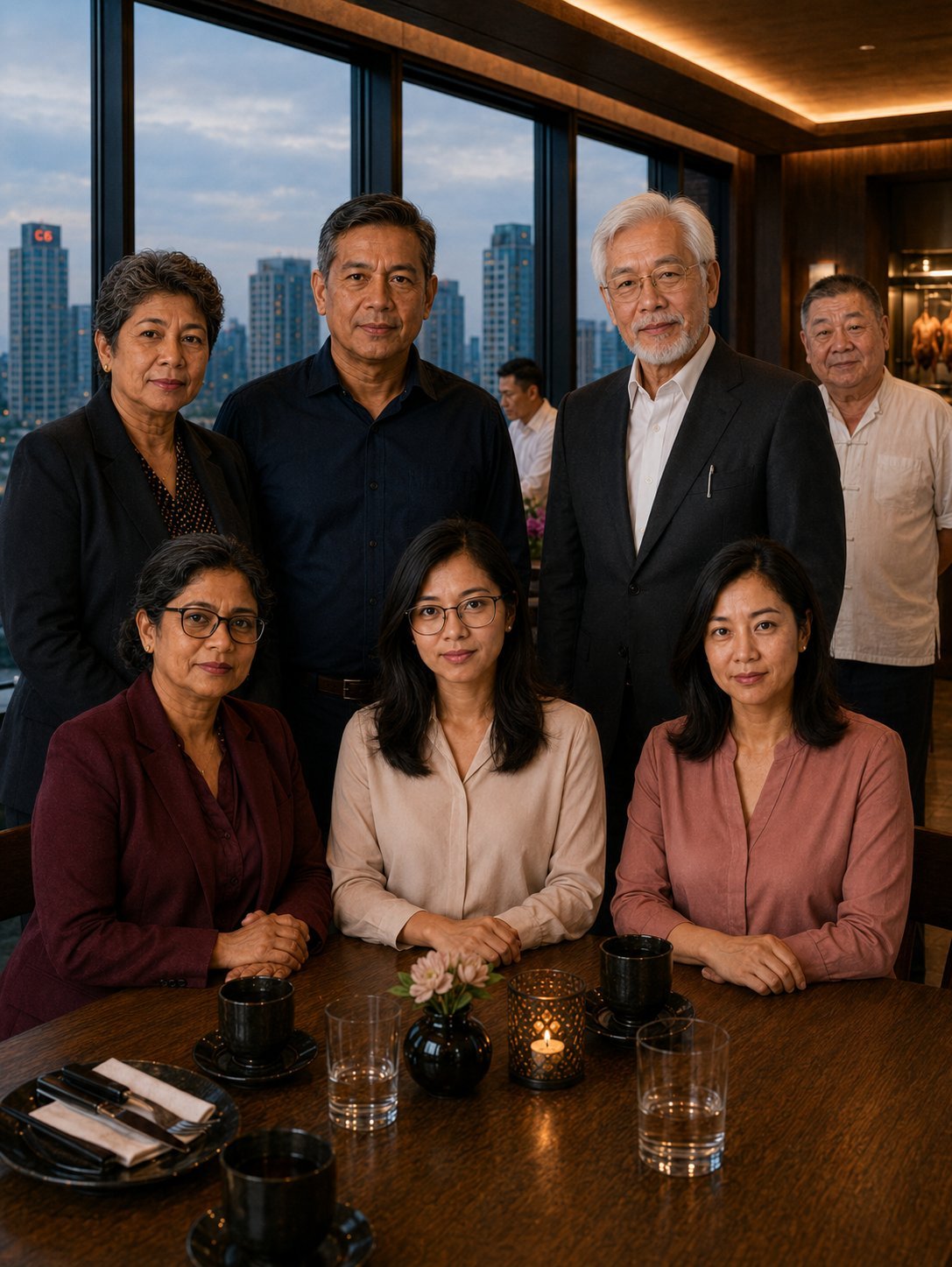

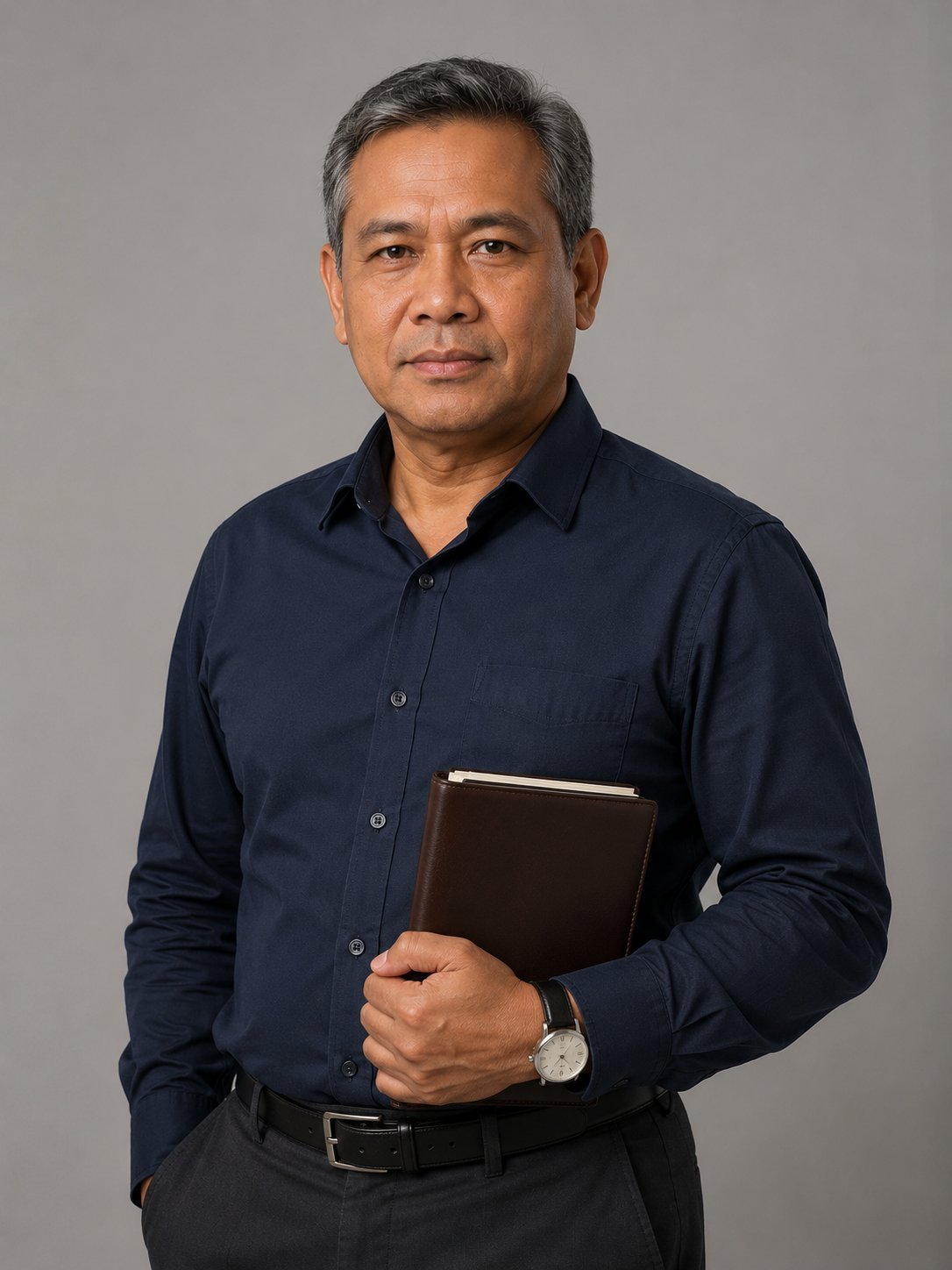
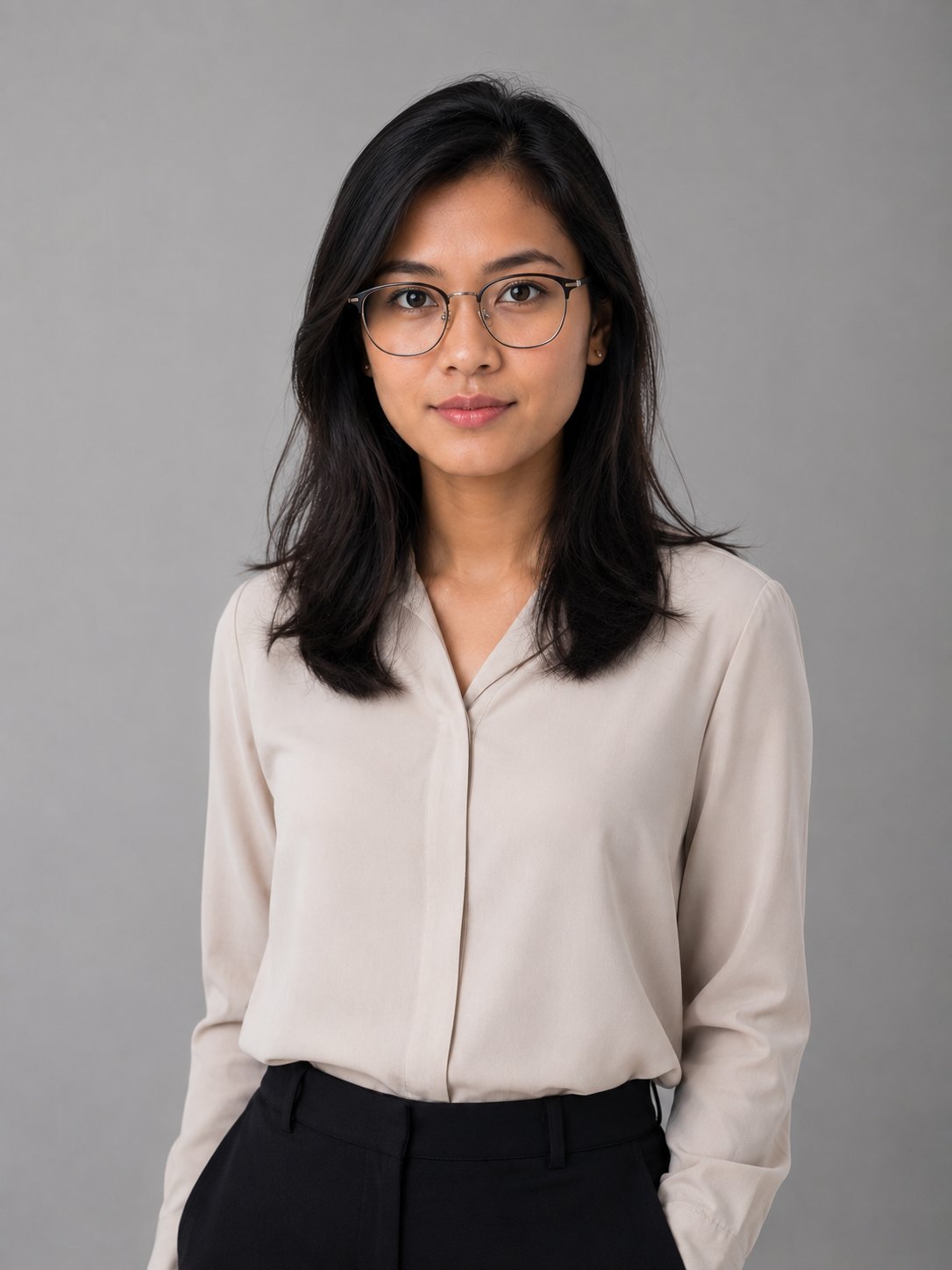
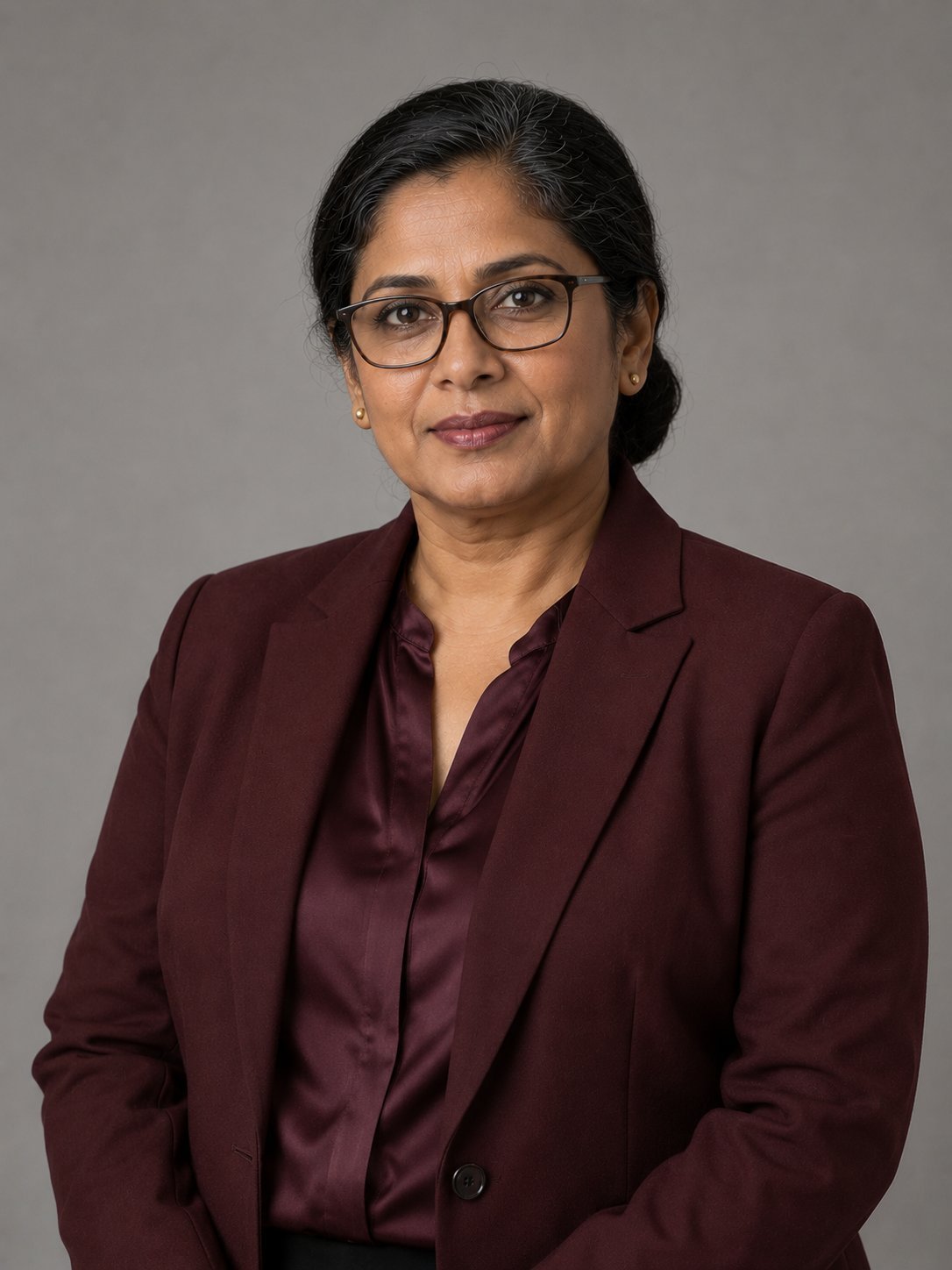
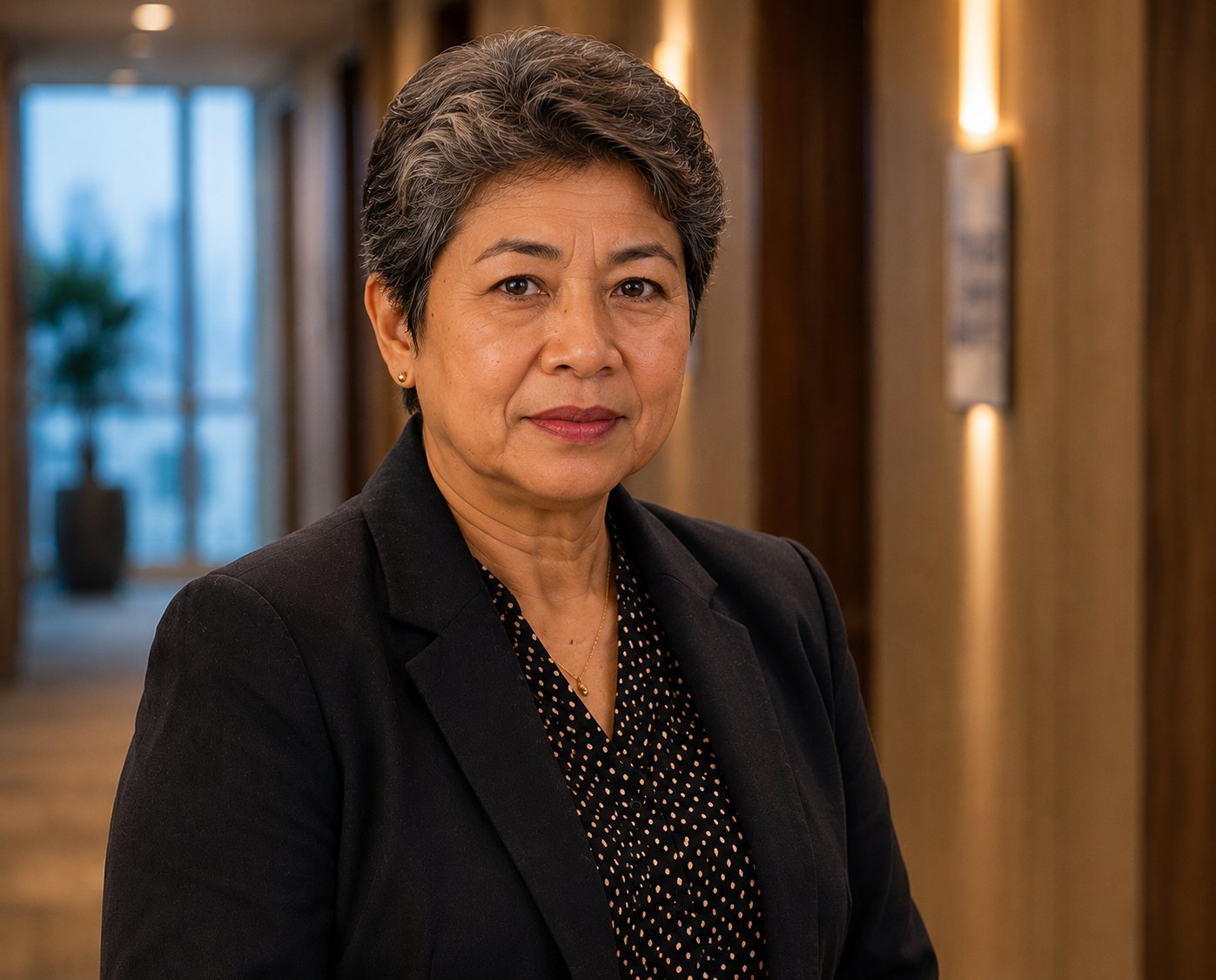

The cast of The Putri Protocol at Ong's Restaurant, Petaling Jaya

GenAI for Practitioner  ·  A Story in Three Chapters

The Putri
Protocol

What gets built on a Wednesday.

"The Putri Protocol" is a story about what happened on a Wednesday in Petaling Jaya when a consultant submitted a report she didn't check, a senior manager put it in a folder named HOLD, and a young analyst spent ninety minutes at a dining table dismantling it — using a handout from a training programme she had attended the month before. What follows is not a story about AI going wrong. It is a story about the people who catch it, the organisations that have to decide what to do next, and what it actually takes to turn a near-miss into a system that works on the days when nobody is watching.

The People in This Story  · Click to meet them

Maya Chin
Maya
Amir
Amir
Putri
Putri
Dr. Rohini
Dr. Rohini
Faridah
Faridah
Tan Sri David Lim
David
Kevin Ong
Kevin
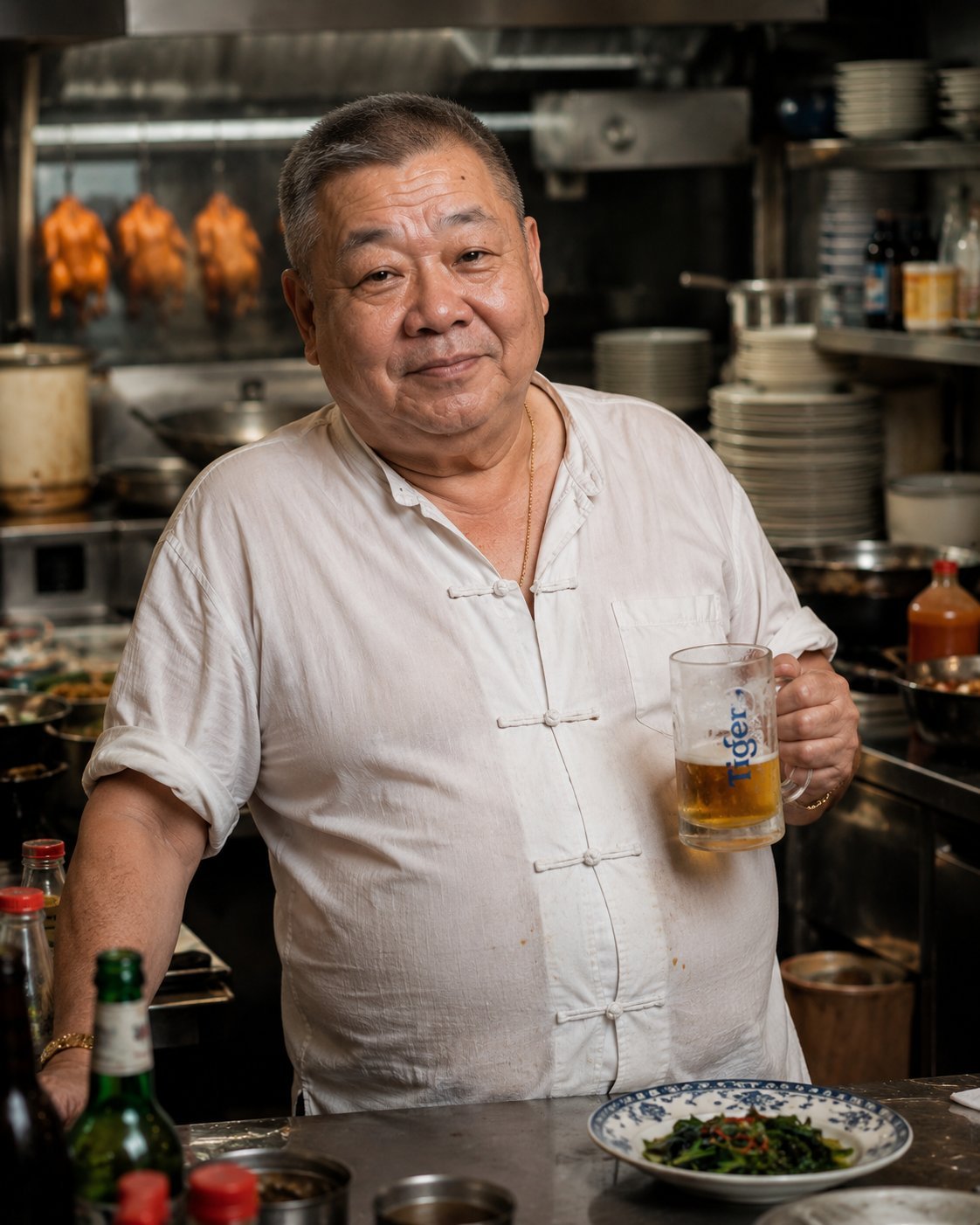
Mr. Ong
Mr. Ong
Chapter I
What the AI Didn't Tell You
A training needs analysis. A free AI tool. A HOLD folder. And a young analyst at a dining table in PJ who caught all of it with a handout from the month before.
Chapter II
The Lunch That Changed the Brief
The MoH email had been sitting unanswered for three months. David said one thing, once. Faridah asked three questions. Nobody answered them.
Chapter III
What Gets Built on a Wednesday
Three weeks later. Amir's team is running the protocol without him. Faridah is about to see the one column the AI cannot fill in.
The Story Continues · Series 2
The Empty Circle

A year after the Putri Protocol became a system, a USD 4 million tender arrives by invitation — and a brief that asks BrightBridge to assess a thirty per cent workforce rationalisation. Then the ground moves. Chapters Four to Six.

Read Series 2: The Empty Circle →
Chapter I  ·  The Putri Protocol

What the AI Didn't Tell You

14 min read

A training needs analysis. A free AI tool. A HOLD folder. And a young analyst at a dining table in PJ who caught all of it with a handout from the month before.

I
The Training Room — KLCC, Wednesday Morning

Present day. Training centre near KLCC, Kuala Lumpur.
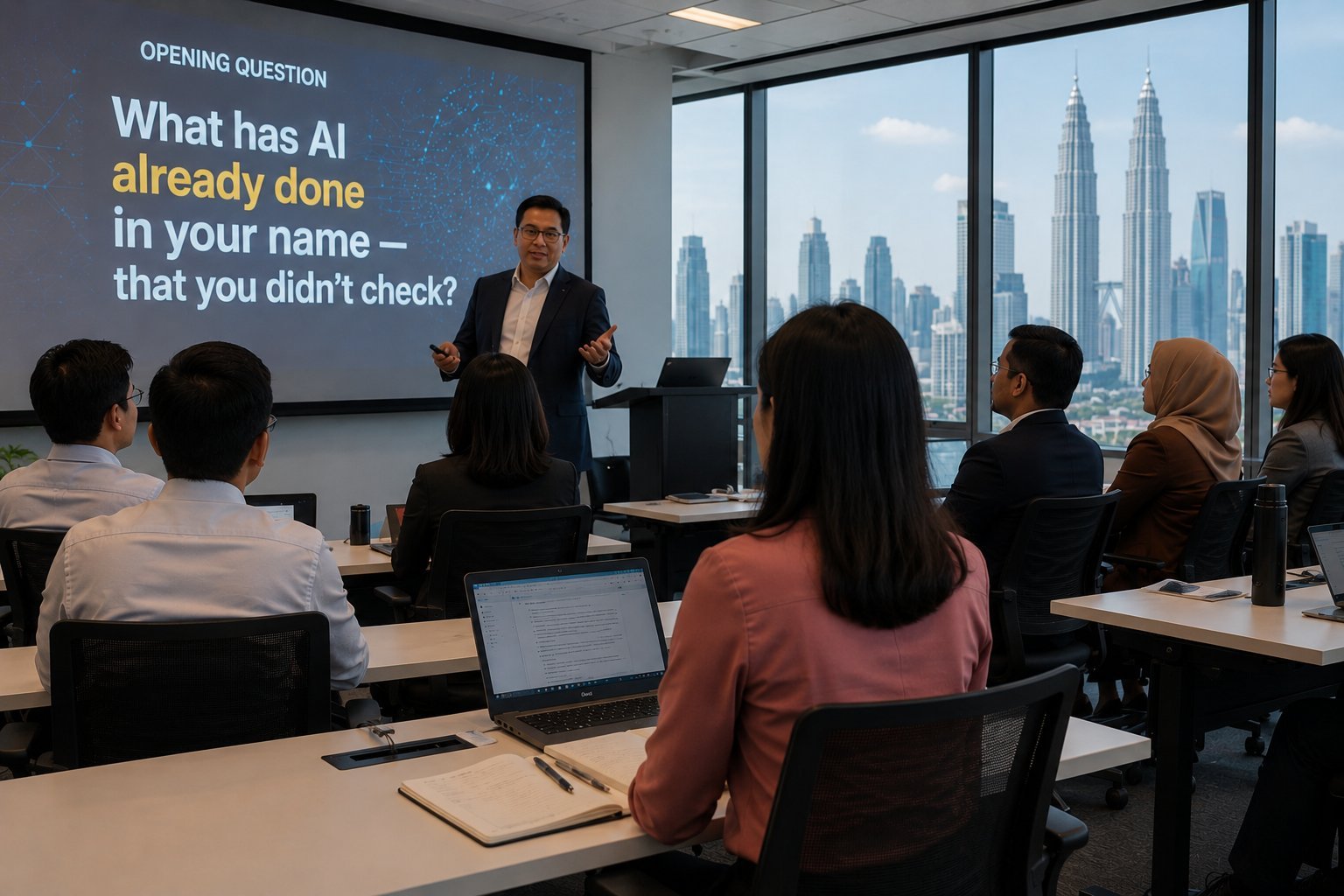
Maya in the training room, KLCC — the opening question
Training centre near KLCC, Kuala Lumpur · Wednesday morning

The room was bright in the way that training rooms always are — large windows, arranged tables, name cards, enough cable clips to suggest someone had thought carefully about the power points. Through the glass, the KL skyline held its usual Wednesday-morning posture: the Towers in the distance, the LRT threading between buildings, the city going about its business below.

Maya Chin had taken the second row. Not the front — she wasn't that kind of person — but close enough that she wouldn't miss anything. Laptop open, notebook beside it, a line already drawn down the centre of the first page. One column for things to remember, one for things to act on. Both still empty.

Maya was thirty-one and had been at BrightBridge for four years. BrightBridge Consulting was a management consulting and training firm in Petaling Jaya — ninety people, RM 20 million in annual revenue, a reputation built over thirty years on the kind of precision that made government ministries and GLCs renew their contracts without being asked twice. The firm had been founded in the mid-nineties by Dr. Krishnamurthy, whose name still carried enough weight in Malaysian professional services that people who had worked with him back then mentioned it with a particular quietness. The firm now belonged to his daughter, who had inherited it and carried it forward. Dr. Rohini had been running BrightBridge for long enough that most people no longer thought to separate the two.

Maya designed and delivered training programmes — TNA reports, programme proposals, post-training evaluations, her name on every deliverable. She was good at her job and knew it. That, as it turned out, had been part of the problem.

Amir was somewhere in the back half of the room. She knew he was there but hadn't looked. They had arrived separately and there was an unspoken agreement between them that this was not a team exercise. They were here to learn, individually, what they had not known they were missing.

The trainer was younger than most of the room expected — early forties, the kind of person who had clearly spent years doing the work before standing in front of it. He had a marker in one hand and had not yet uncapped it. He faced the room and it settled.

Trainer

"Before we look at what AI can do for you — I want to ask something more uncomfortable. What has AI already done in your name — that you didn't check?"

The room absorbed this in the way of professionals caught off guard who will not show it. Someone stopped moving their mouse. Maya looked at her empty columns.

In your name.

The phrase did its work quietly. And sitting in the second row with the KL skyline behind her, Maya let herself remember.

II
Three Weeks Earlier — BrightBridge, PJ

Three weeks before the training. BrightBridge office, Petaling Jaya. A Wednesday.
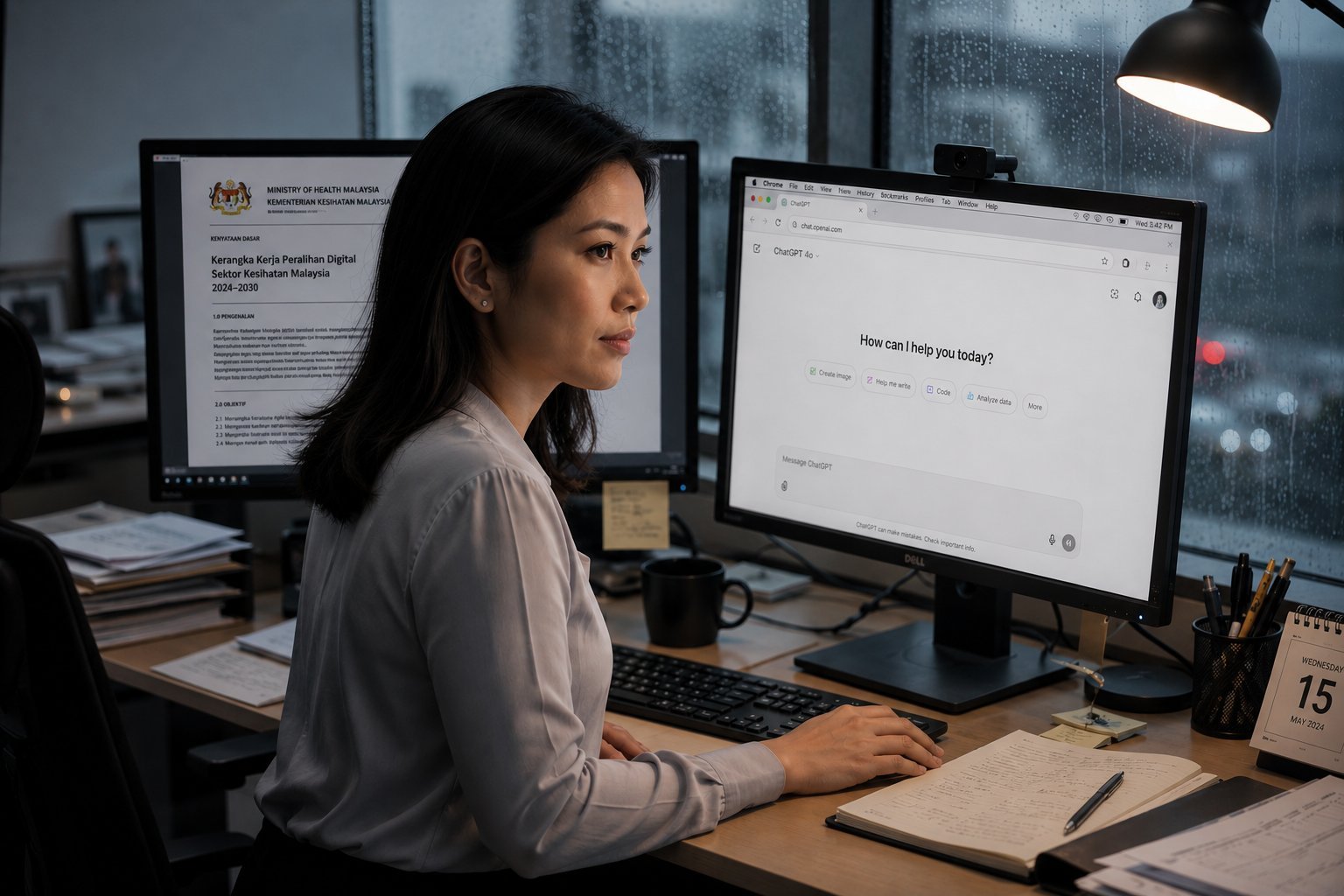
Maya at her desk, the MoH brief on one screen, ChatGPT on the other
BrightBridge, Petaling Jaya · Wednesday, 5:42pm · Rain on the window

The MoH brief was on one screen. A blank document on the other. Training Needs Analysis for the Ministry of Health — digital skills gaps across administrative and clinical support staff. Maya had done TNA work before, many times. She knew the structure. What she didn't have was time.

The Brief

Three working days. Twelve pages. 800 staff across three departments. A client whose legal team cross-referenced everything.

She stared at the blank document for forty seconds. Then she opened ChatGPT.

The output arrived fast. Confident, formatted, exactly the shape of a document she would have written herself given twice the time. It had statistics, citations, the right sector vocabulary. It read like someone who knew the brief.

She copied the executive summary into her document, adjusted the header, and moved on.

She did not verify a single figure. She did not know she was supposed to.

III
Amir's Desk — That Afternoon

The same Wednesday. BrightBridge office, late afternoon.

By the time the floor had thinned out, only the lamp on Amir's side of the office was still on.

He was fifty-two and had been at BrightBridge for nine years, with thirteen years in government-linked consulting before that — long enough that reading a client deliverable had become a physical habit. Slowly, from the beginning, without skipping, the way you read something when your name will be the last line of defence. He had built BrightBridge's public sector division from nothing. Four government ministry accounts. RM 6.5 million in annual revenue. The MoH relationship alone — four years, multiple contracts, the kind of trust that arrives slowly and departs quickly.

He read the executive summary Maya had submitted. Then he read it again.

The Report

"67% of Malaysian public sector employees report insufficient digital training (MoH Benchmarking Study, 2023)."

He leaned back.

He had worked with MoH for four years. He received their newsletters. He attended their briefings. He did not recognise this study.

It was possible he had missed it. He kept that possibility separate from what his instincts were telling him, the way careful men do. He did not send the report. He created a folder on his desktop, named it HOLD, and dragged the file in. He typed Maya a message: "Can we talk tomorrow? Need to check a few things." He did not say which things.

He drove home to PJ in the rain.

IV
The Dining Table — That Night

That Wednesday evening. Amir's home, Petaling Jaya.

His daughter was still at the table when he got in, laptop open, a mug of tea going cold at her elbow.

Putri was in her twenties — she had her father's stillness and her mother's directness, which made her, in Amir's considered opinion, better equipped for most situations than either of them had been at her age. She worked as a Business Analyst at a fintech company in KL, a forty-minute LRT commute she made because she said driving into the city was a choice only people with too much optimism would make.

She looked up and immediately looked at him more carefully.

Putri

"What happened?"

Amir

"Nothing happened."

Which was accurate. He sat across from her and opened his tablet.

Amir

"A report. One of my consultants. Some statistics I don't recognise."

Putri put down her fork — not her phone, not her pen, her fork — and looked at him across the table.

Putri

"Did she use AI to write it?"

He looked up. The question was so direct and so precisely aimed that for a moment he just sat with it. He hadn't asked Maya. It hadn't occurred to him to ask — he had assumed his team knew what they were doing with AI tools, in the general way that managers assume things they haven't individually examined. The assumption looked different sitting between them at the dinner table.

Amir

"I don't know."

Putri opened her laptop and reached into her bag for a folded handout. The month before, she had attended GenAI for Practitioners — a two-part AI training programme run by P2P Talent Development near KLCC. She had enrolled on her own time because the description matched something her fintech team needed and she had wanted to see it for herself.

She smoothed the handout on the table.

Putri

"Let me show you what they taught us."

V
Ninety Minutes

That Wednesday night. The dining table.
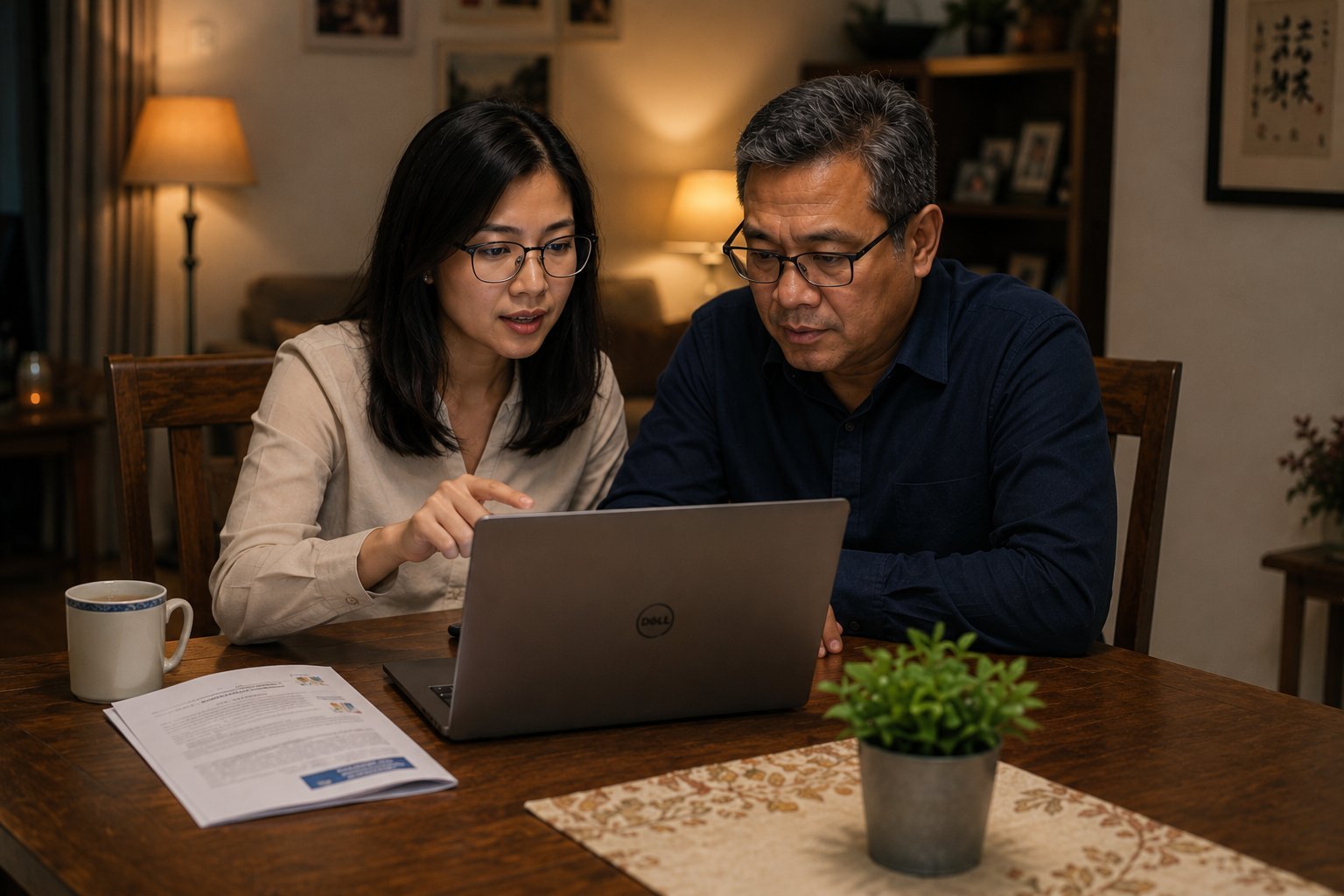
Putri and Amir at the dining table — ninety minutes
Amir's home, Petaling Jaya · Wednesday night

Putri worked through it without drama, the way she worked through everything.

Traffic light classification first — the report contained specific citations from government sources, which made it Red: human verification required before submission. Then the forensic read: she found patterns in the first three pages she recognised from the training lab. Confident passive voice. Citations without page numbers. Statistics presented as findings rather than estimates. Recommendations that addressed the sector rather than the specific brief.

She extracted eleven claims and flagged four as high priority. Then she verified each one.

Finding 1 — Phantom Study

The MoH Benchmarking Study, 2023: no results across three search variations. Ministry of Health publications portal, national health data repository, full Boolean search. Nothing. The study did not exist.

Finding 2 — Real Source, Wrong Number

The WHO Digital Health Framework citation: the document was legitimate. The specific figure attributed to it was not in the document. The AI had cited a real source for a number that wasn't there.

Finding 3 — Inflated Figure

A workforce readiness statistic attributed to a 2022 industry survey: she found the survey. The published figure was 34%. The TNA stated 61%. The number had not been fabricated — it had been inflated, plausibly, in a way that would survive a casual search but not a careful one.

Finding 4 — Wrong Client

The subtlest finding. The recommendations were calibrated to a generalised Malaysian government ministry, not to a health ministry with clinical workflows and patient data considerations. The report had been written for a client that didn't quite exist.

Putri closed her laptop.

Putri

"Three of the four key statistics are wrong or unverifiable. One cited source contained a different number entirely. The recommendations don't cover the people the client specifically asked about. And the whole thing was written for a generic government ministry rather than a health organisation with clinical staff and patient data."

"The AI didn't invent all of it. Some of it was real information used inaccurately. That's actually harder to catch than a complete fabrication."

Amir was very still.

This was not a routine report. This was the TNA for MoH's Digital Transformation Unit — approximately 800 staff across three departments, a brief built from three rounds of stakeholder interviews that he had personally arranged. The contract was worth RM 95,000. Behind it, contingent on the quality of this deliverable, was a follow-on training design contract worth RM 220,000 more. It was the largest new account his division had won all year.

He thought about the MoH director — a careful, methodical man who had given BrightBridge three rounds of stakeholder interviews on the basis of a relationship Amir had spent four years building, one meeting at a time, one delivered commitment at a time. He thought about 800 staff across three departments whose real training needs were now sitting in a document that cited a study that did not exist, inflated a survey figure by 27 percentage points, and had quietly erased an entire category of clinical administrative workers from its recommendations.

He thought about what happened to a four-year relationship when trust broke at the point of delivery.

Amir

"If I had sent this to MoH—"

Putri looked at him steadily. She did not finish the sentence for him.

Putri

"Ayah — the AI didn't lie on purpose. It doesn't know how to say it's not sure. It produces what a correct answer looks like. The submission without checking — that part can be fixed."

She slid the handout across the table. He picked it up and read it slowly.

VI
Thursday — The Correction

The next morning. BrightBridge office, meeting room.
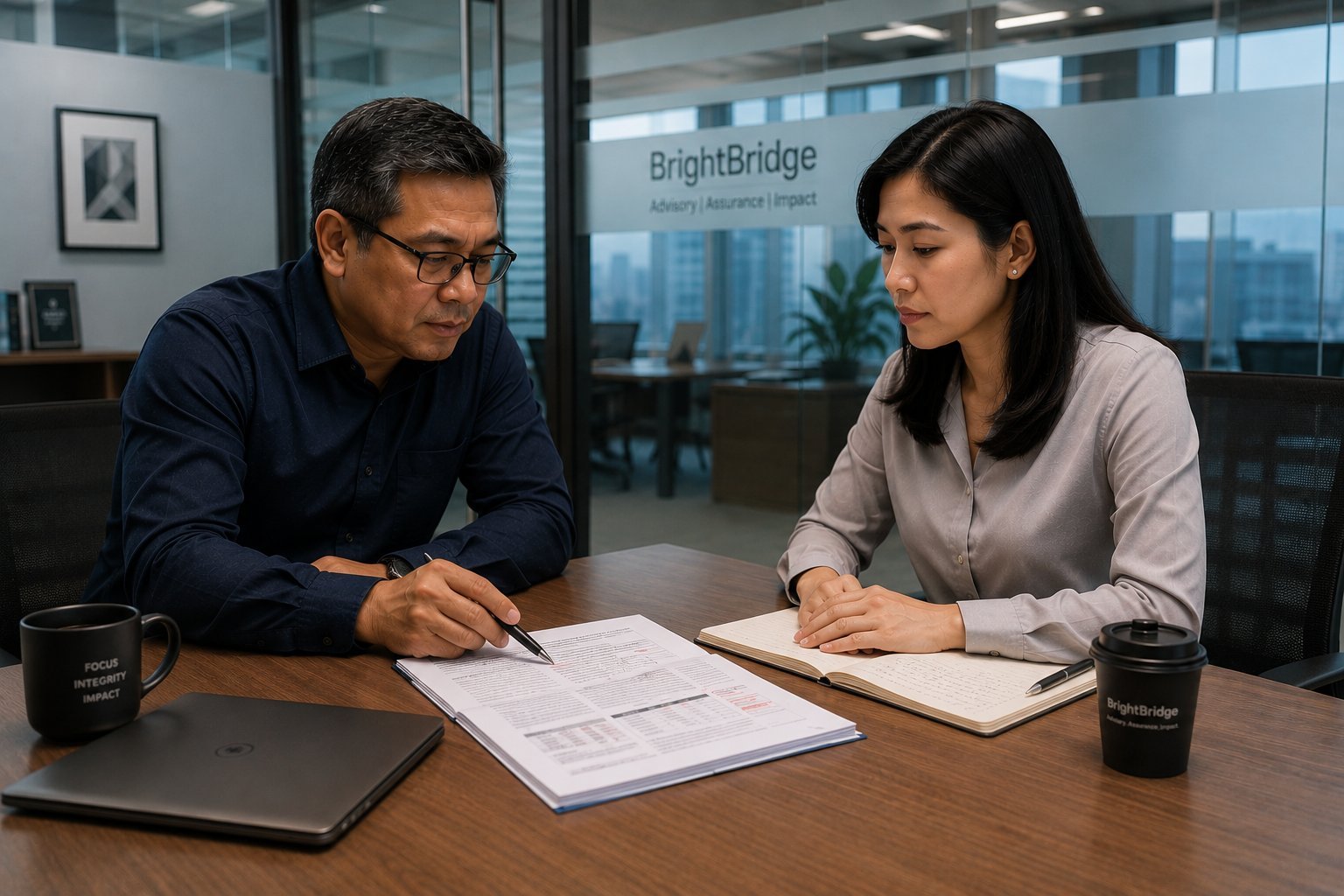
Amir and Maya in the BrightBridge meeting room — the correction
BrightBridge Consulting, Petaling Jaya · Thursday morning

The meeting room had a glass wall and half-drawn blinds. Amir arrived first and set the printed report on the table. Maya came in and read the room the way she read all rooms — quickly, without showing it — and sat across from him with her hands flat on the table.

He walked through it. Calmly, specifically, one item at a time. He showed her the screen. He did not editorialise.

Maya did not interrupt. When he finished she looked at the report rather than at him.

Maya

"I didn't know you had to verify the statistics. I thought if the AI cited something, it had looked it up somewhere."

Amir

"That's what it's designed to look like. It's not what it's doing."

Maya

"What about the data I uploaded?"

He told her. The free tool. The staff names and role categories she had uploaded to give the AI context. What it meant, legally, when data left BrightBridge's systems and was processed on servers outside Malaysia. The PDPA. The exposure she hadn't known existed.

She went very still. Not dramatic — Maya didn't do dramatic. The stillness of someone recalculating.

They corrected the report together over the next forty minutes. He searched. She rewrote. The unverifiable statistics came out. Verified figures, sourced and footnoted, went in. The frontline clinical administrative staff reappeared in the recommendations. The generic ministry framing was replaced with language that reflected an organisation with clinical workflows, patient data, and a health ministry context.

10:40am — Amir sends to MoH: "Please find the updated version following our internal quality review."
Next afternoon — MoH replies: "Received, thank you."

What neither of them said: that they had been lucky. That a young analyst had caught it at a dinner table using a training handout from the month before. That this was not a process. It was luck. And luck is not something you can manage.

VII
The Days That Followed

BrightBridge office. The week after the correction.

The report had gone. The relationship had held. But Amir found he could not stop thinking about the word systematic.

He began applying Putri's checklist to deliverables from the rest of his team. A proposal from a junior consultant: two statistics attributed to industry benchmarks that traced to nothing published. He removed them quietly. Left a note in the margin: Source required before submission — AR. A policy brief from another: a government statistic that was real but three years out of date, presented without a date. He flagged it. Sent it back.

He was catching things. That was the problem. Every catch meant he had been the last line of defence. One person, reading manually, one document at a time. There was no system. There was only him.

He sat with the word and it did not resolve.

VIII
The WhatsApp

A few days later. Evening.

His phone lit up on the desk. Putri.

Putri · WhatsApp

"Ayah — the programme I attended last month. It's run by P2P Talent Development — under MPC, the Malaysia Project Management Practitioner Community. They do PM professional certification, AI initiatives, ESG management training. They work with local and foreign universities. It's not a vendor course. Part 2 has a new session running next week. Part 1 also has a seat. I think you should go. Both of you."

He read it twice. Then he opened his email and wrote to Dr. Rohini.

Amir to Dr. Rohini

"Dr. Rohini, I want to send myself and Maya for the GenAI for Practitioners programme at P2P Talent Development. My daughter attended last month and used what she learned to catch a significant error in a client deliverable before it went out. I'll explain the details in person. Twenty minutes this week?"

Dr. Rohini · two hours later

"Thursday lunch. David is already coming — our regular quarterly. Faridah has also been invited. It works out — bring the programme details and we'll discuss."

Amir read this twice.

He had asked for twenty minutes. She was giving him a lunch table with the board chairman and the head of operations. And she hadn't told him that was what it was. She had said it works out — the phrasing of someone for whom this was not a coincidence but an arrangement.

He booked the programme before the lunch. Sent Maya the confirmation. Told her only that the dates were set.

IX
Thursday — Ong's Restaurant

Thursday. Ong's Restaurant, rooftop of the BrightBridge office tower, Petaling Jaya.

The lift opened onto a corridor and Amir stepped into the particular quality of air that comes from a kitchen that has been running since morning. He was a few minutes early. He always was.

The restaurant occupied the entire rooftop of the building. Floor-to-ceiling windows ran the full length of the city-facing side, and through them the PJ skyline spread out in the afternoon light — older commercial blocks from the nineties sitting alongside the glass towers of the past decade, a crane visible at the eastern edge still working on something not yet finished. From up here you could see thirty years of PJ's growth at once, layered and unrushed.

Faridah was at the window table, a coffee in front of her. She was fifty-six and had been at BrightBridge for more than twenty years — longer than anyone except Dr. Rohini. She had built the firm's delivery infrastructure from nothing: the quality controls, the submission protocols, the institutional knowledge of which government contact to call when a submission was delayed, which client preferred phone over email. Twenty-five people in Shared Services reported to her. The firm ran, in practical terms, because Faridah knew what she knew.

Beside her, Tan Sri David Lim. Sixty-seven. A retired PwC senior partner — thirty years in the firm, the last fifteen in governance and risk advisory. Four public company boards. The closest professional friend of Dr. Rohini's late father, present at BrightBridge's founding, the institutional memory of what the firm had been built to be. He put his phone away when Amir approached, the deliberate courtesy of a man from a generation that considered the gesture meaningful.

David

"Amir."

Amir

"Tan Sri."

He had asked Dr. Rohini for twenty minutes about a training programme. She had assembled the board chairman and the head of operations at a window table and called it lunch. And she still hadn't arrived.

Something settled in him — not alarm, but the quiet alertness of a man who has learned to trust the feeling that a conversation is larger than it was introduced as. He reached for the menu. He waited.

The lift chimed somewhere behind him.

He heard Dr. Rohini's heels on the floor, and understood, before he turned around, that whatever he had come here expecting was not what this lunch was going to be about.

· · ·
Coming Next — Chapter II

The Lunch That Changed the Brief

Dr. Rohini reveals an email that has been sitting on her desk for three months. David says one thing, once, and does not repeat it. Faridah asks three questions that nobody answers. Amir asks for a training budget and leaves with a board commission.

GenAI for Practitioner

The verification method Putri used at that dinner table. The governance system Amir was about to discover he needed. Both built live, in the training room, from your actual job.
GenAI for Practitioner
Programme 1
AI for Practitioner
HRDC: DT-P1-GAIP
GenAI for Practitioner
Programme 2
AI Governance and Advanced Practice
HRDC: DT-P2-GAIP  ·  Programme 1 mandatory
Two one-day programmes in Kuala Lumpur. 100% HRD Corp claimable under SBL-Khas.   genai4p.web.app →
Chapter II  ·  The Putri Protocol

The Lunch That Changed the Brief

10 min read

The MoH email had been sitting unanswered for three months. David said one thing, once. Faridah asked three questions. Nobody answered them. Amir asked for a training budget and left with a board commission.

X
A Room That Knows How to Hold a Conversation

Ong's Restaurant, rooftop of the BrightBridge office tower, Petaling Jaya.

The restaurant opened the same year the tower did — 1995 — when the tower management wanted something at the top that would make the building feel like an address rather than a postbox. Mr. Ong pitched for it. A Hainanese Malaysian in his early forties then, with a lifetime in hospitality and a clear idea of what a room should feel like. He won the tender. He never left.

The menu is continental. It has not changed significantly in thirty years, which is either confidence or establishment, and at Ong's it is both. Mr. Ong is in his seventies now. He comes in most days, moves through the room the way founders move through things they have built — not managing, just present. He occasionally calls Dr. Rohini "Dr. Krishnamurthy's daughter" by accident, catches himself, corrects it. She has never minded.

His son Kevin returned from Melbourne five years ago after studying hospitality management. He updated the presentation, opened three branches, and had the good sense not to change anything in the rooftop original that did not need changing. This room has a quality the branches have not yet grown into. It takes time for a room to learn how to hold a serious conversation.

BrightBridge moved into the tower the same year it opened. Dr. Krishnamurthy used to bring Dr. Rohini here for client lunches when she was young — to watch and learn, he said, not to speak. She watched him handle a difficult client in this room once. The client wanted to cut scope. Dr. Krishnamurthy stayed completely calm and asked one question: "What do you want your board to say about this in two years?" The client went quiet. The scope was approved in full.

David had been coming here for over twenty years. He and Dr. Krishnamurthy lunched at Ong's at least once a month for more than a decade, from sometime in the mid-two-thousands until Dr. Krishnamurthy passed. When David sits at the window table now, he is sitting where he sat then. The skyline outside has changed considerably. He does not say this.

Kevin has the window table ready when they arrive. He does not need to be asked.

XI
The Table Is Complete

Thursday lunch. The window table. Amir arrived first. David and Faridah were already seated.

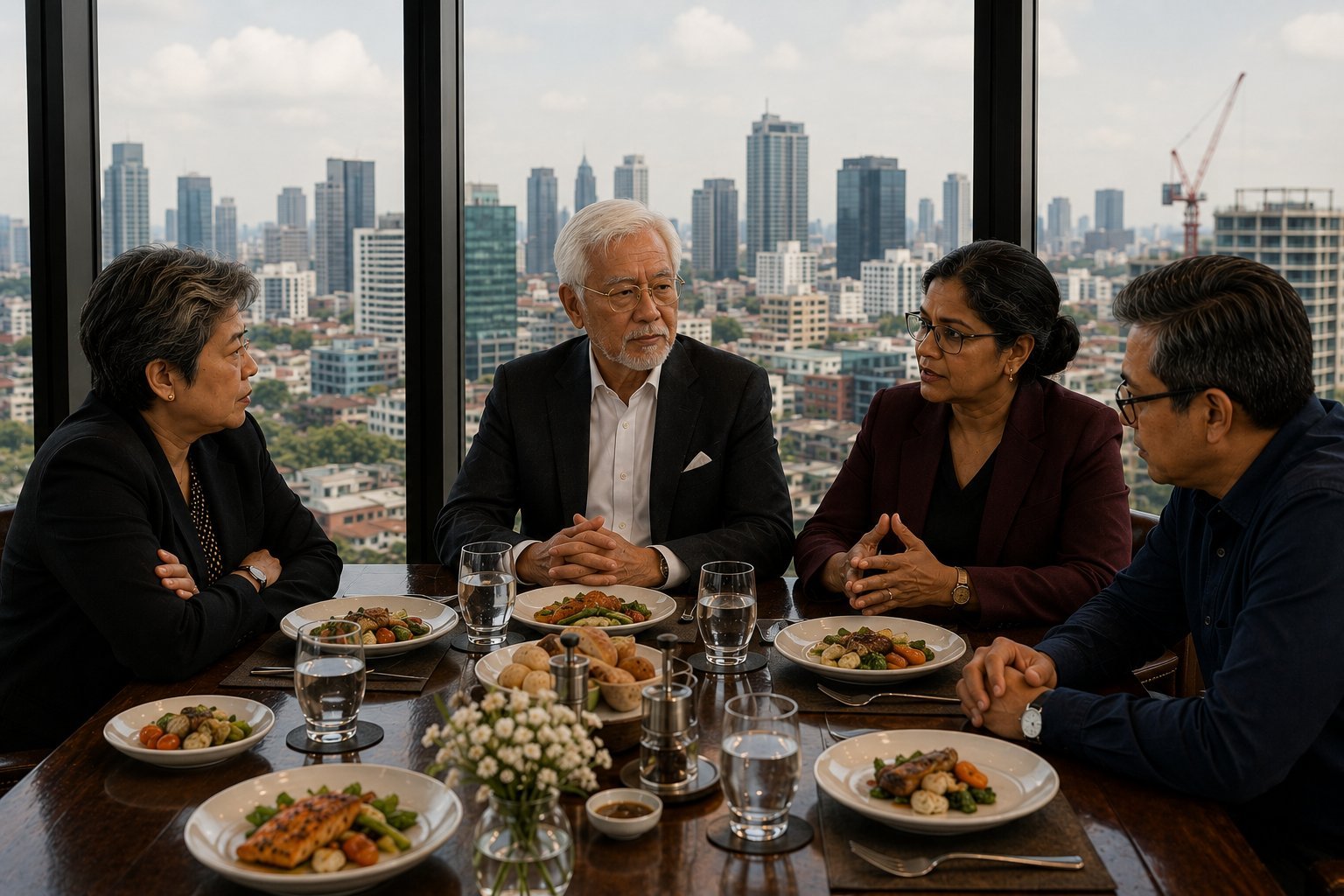
The window table at Ong's — four people, one conversation
Ong's Restaurant, Petaling Jaya · Thursday lunch · The window table

Dr. Rohini arrived on time, which at this table meant last. She took her seat, Kevin appeared with a menu she didn't open, and for a moment nobody said anything. Four people who had been in enough meetings together to know the difference between a pause that needed filling and one that didn't.

This one didn't.

David asked about Amir's drive in. Faridah mentioned the roadworks on the Federal Highway, which she said had been there since 2019 and showed no signs of resolving. Dr. Rohini ordered the fish. Kevin confirmed the usual for the others and withdrew.

Four minutes for the table to settle into itself. Then Dr. Rohini set down her water glass.

Dr. Rohini

"Let me start with something that has been sitting on my desk for three months. David, I forwarded it to you."

David

"I read it."

Three months ago, the Ministry of Health's legal team had sent a formal query to BrightBridge — directly to Dr. Rohini, not to the account team. Four questions: what AI tools was BrightBridge using on the MoH account? What data had been processed through those tools? Did the firm have a documented AI use policy? And did their data processing agreement with MoH cover AI tool use?

She had drafted two responses. Deleted both. She did not have an answer she could stand behind for any of the four.

Faridah

"Who sent it? Was it from procurement or their legal unit?"

Dr. Rohini

"Legal unit."

Faridah

"So this is not a standard vendor questionnaire. Someone decided to send this formally."

Faridah

"And who is accountable if there is a problem? Because if MoH follows up, it goes to the account team, then to operations, and I am the one who has to answer for delivery. I need to know what I am answering for."

David

"That is exactly the right question."

XII
The Pattern

The food has not yet arrived. The crane at the eastern edge moves slowly outside the window.

David put his water glass down and looked out the window for a moment. Not at anyone. At the skyline.

David

"I have watched three transitions in my career. Quality management in the nineties. Data privacy in the two-thousands. ESG in the twenty-tens. Each time, the same thing happened. The firms that treated it as a compliance burden fell behind. The firms that treated it as a capability built services around it and advised their clients through it."

Nobody filled the pause.

David

"The firms that governed first advised first. That is what this is."

He said it once. He did not repeat it.

Dr. Rohini heard it as an opening. She had been trying to find the right frame for the MoH email for three months. Amir heard it as a signal — he had come to ask for a training budget; he was beginning to understand the room had moved past that. Faridah heard the word governed and heard underneath it the implication that what had been built over more than twenty years was not yet enough. She said nothing. She looked at the same skyline David had just looked at, and she may have seen something different in it.

XIII
What Almost Went Out

The food arrives. Kevin checks on the table once and leaves.

Dr. Rohini looked at Amir. His turn. He did not embellish. He described it one item at a time.

The Near-Miss, as Amir Told It

Three weeks ago. The TNA for MoH's Digital Transformation Unit — 800 staff, three departments, RM 95,000 contract with a RM 220,000 follow-on conditional on delivery quality. Maya used a free AI tool. No structured prompting. No verification. A benchmarking study that did not exist. A WHO citation with a figure not in the source document. A workforce statistic inflated by 27 percentage points. The frontline clinical staff named in the brief had vanished from the recommendations entirely. Amir held the report in a HOLD folder. His daughter — who had attended a GenAI training programme the previous month — caught all of it at his dining table in ninety minutes. The corrected report went to MoH the following morning.

Dr. Rohini

"Was MoH data uploaded to the free tool?"

Amir

"Yes. Staff names, IC numbers, salary bands, role classifications. Maya uploaded the HR annex to give the AI context. All of it went through a free consumer platform with no data processing agreement in place."

Faridah set her fork down. A small, deliberate movement.

Faridah

"So we have a PDPA exposure on a government account. And the same ministry is now asking us — three months later — for an AI policy we don't have."

Amir

"Yes. Which is why I want to send myself and Maya for the GenAI for Practitioners programme. Part 1 is AI skills and responsible use. Part 2 is governance — ISO 42001, PDPA compliance, audit systems, policy. My daughter used what she learned in Part 1 to catch this. I want to come back from Part 2 with something we can actually deploy."

He paused. Something practical, before she could ask.

Amir

"The fee is claimable from HRDC. Fully, under SBL-Khas. Both sessions."

Dr. Rohini looked at him. Then at Faridah. Faridah had already written something in the margin of her printout.

XIV
The Practical Questions

Dr. Rohini is reading the brochure. The table waits.

Faridah

"Something practical. If we build a governance process — policies, audit logs, verification steps — who runs it day to day? Because right now, everything that touches delivery quality runs through my team. We are not at capacity. We are past it."

Amir started to answer. She held up one hand — not dismissively, but the gesture of someone who had not finished.

Faridah

"I am not asking about the training. I am asking about what happens after. Who owns the compliance on an ongoing basis? What does it add to a consultant's daily workflow? And if something goes wrong, which it will, who is the person that MoH calls?"

Three questions. None of them rhetorical. Amir opened his mouth and then did not speak. He did not yet have answers. The programme was how he intended to find them. But saying so at this table felt like arriving at a client meeting with the slide deck half-built.

Dr. Rohini

"Those are the right questions. And we don't have the answers yet. That is the point."

Faridah

"I understand that. But there is a difference between not having the answers yet and not knowing who is supposed to find them."

Nobody answered this one. The table sat with Faridah's point. It was accurate, and it was unanswered, and everyone present understood that unanswered was how it was going to leave the room today.

XV
Budget Approved

The plates are cleared. The afternoon has moved on.

Dr. Rohini

"Budget approved."

Amir waited. Four words delivered that cleanly were rarely the end of a sentence with Dr. Rohini.

Dr. Rohini

"When you finish the programme, I need a governance proposal. ISO 42001 readiness for BrightBridge — where we actually are, not where we would like to be. Our PDPA position on AI processing. A policy draft — one page, deployable. And a service concept. What AI governance looks like as something we offer clients, not just something we apply internally. Six weeks. Before the board meeting."

Amir said he understood. He had come for a training budget. He was leaving with a board commission.

Faridah was quiet. She had set her coffee cup down at some point and had not picked it up again. The others had learned, over the years, not to interpret her silence as agreement. It was not agreement. What it was, exactly, was harder to say.

XVI
What Faridah Said in the Corridor

After lunch. The corridor outside Ong's. David is still inside. Amir has already left.

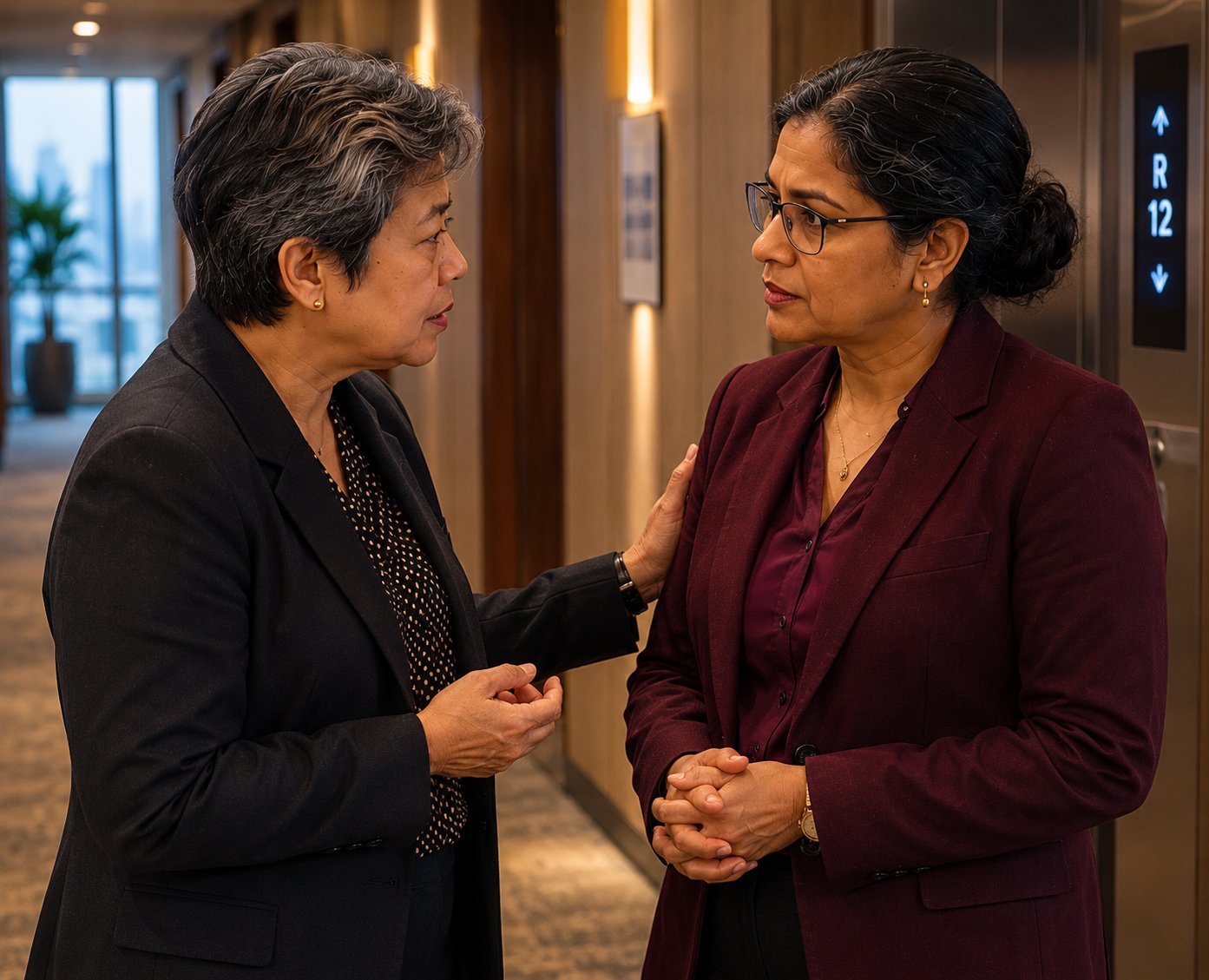
Faridah stops Dr. Rohini in the corridor after lunch
The corridor outside Ong's · Floor R12 · After lunch

Faridah stopped Dr. Rohini with a brief touch on the arm. Dr. Rohini turned and gave her full attention. This was what Dr. Rohini did. When someone needed to speak, she made space without rushing toward reassurance.

Faridah

"I need to say something privately. I have been running delivery for more than twenty years. The quality system, the protocols, the client relationships — I built that without a template. I know how it works and I know why it holds."

"What I don't know is how a governance system designed in a training room maps to what delivery actually looks like on a day when three projects are running late and a client has changed scope. And I'm worried that by the time that question gets asked, my team is already responsible for something they weren't involved in designing."

The corridor was quiet. Below them the lift chimed for someone else. Dr. Rohini heard what Faridah had said. She also heard what was underneath it.

Dr. Rohini

"That's a fair concern. Let's see what Amir brings back. Whatever he proposes, you and I will look at it together before anyone is assigned anything."

Not a resolution. A promise to be included before a decision was made. Faridah nodded once, slowly. It was enough for now.

XVII
The Lift

Immediately after lunch. The corridor. Amir, alone.

Amir pressed the button and waited.

He had come with a programme brochure and a request for twenty minutes. He was leaving with a governance commission, a board deadline, a PDPA exposure now formally on the table, and Faridah's three questions sitting unanswered in the room above him.

He knew what the commission required. He was less certain about what it would cost — not in budget, but in the things that did not show up in proposals. The goodwill of someone who had been doing this for more than twenty years and had not yet been persuaded that what was coming would help rather than complicate. The gap between a governance document and a governance practice.

He thought about what he had written in that folder: HOLD.

The lift arrived. He stepped in.

He took out his notebook. He sat with the blank page for a moment before he wrote anything. Then he wrote one thing.

The question is not what to build. The question is whether what gets built will still make sense on a Wednesday.

He closed the notebook. The doors opened. He stepped out into the lobby — the marble floor, the security desk, the revolving door catching the afternoon light — and walked toward it.

· · ·
Coming Next — Chapter III

What Gets Built on a Wednesday

Three weeks later. Amir's team is running the protocol without him. Maya has invented something without knowing what to call it. Faridah is about to see the one column the AI cannot fill in. And at a window table in Ong's, David asks the only question that matters.

GenAI for Practitioner

The governance system Amir needs to build. The questions Faridah is still waiting to have answered. Both addressed, live, in the training room, from your organisation's actual situation.

GenAI for Practitioner
Programme 1
AI for Practitioner
HRDC: DT-P1-GAIP
GenAI for Practitioner
Programme 2
AI Governance and Advanced Practice
HRDC: DT-P2-GAIP  ·  Programme 1 mandatory
Two one-day programmes in Kuala Lumpur. 100% HRD Corp claimable under SBL-Khas.   genai4p.web.app →
Chapter III  ·  The Putri Protocol

What Gets Built on a Wednesday

13 min read

Three weeks after Chapter I. Amir's team is running the protocol without him. Maya has invented something without knowing what to call it. Faridah is about to see the one column the AI cannot fill in.

XVIII
What You Did With It

Three weeks after Chapter I. The training centre near KLCC. The same room, different energy.

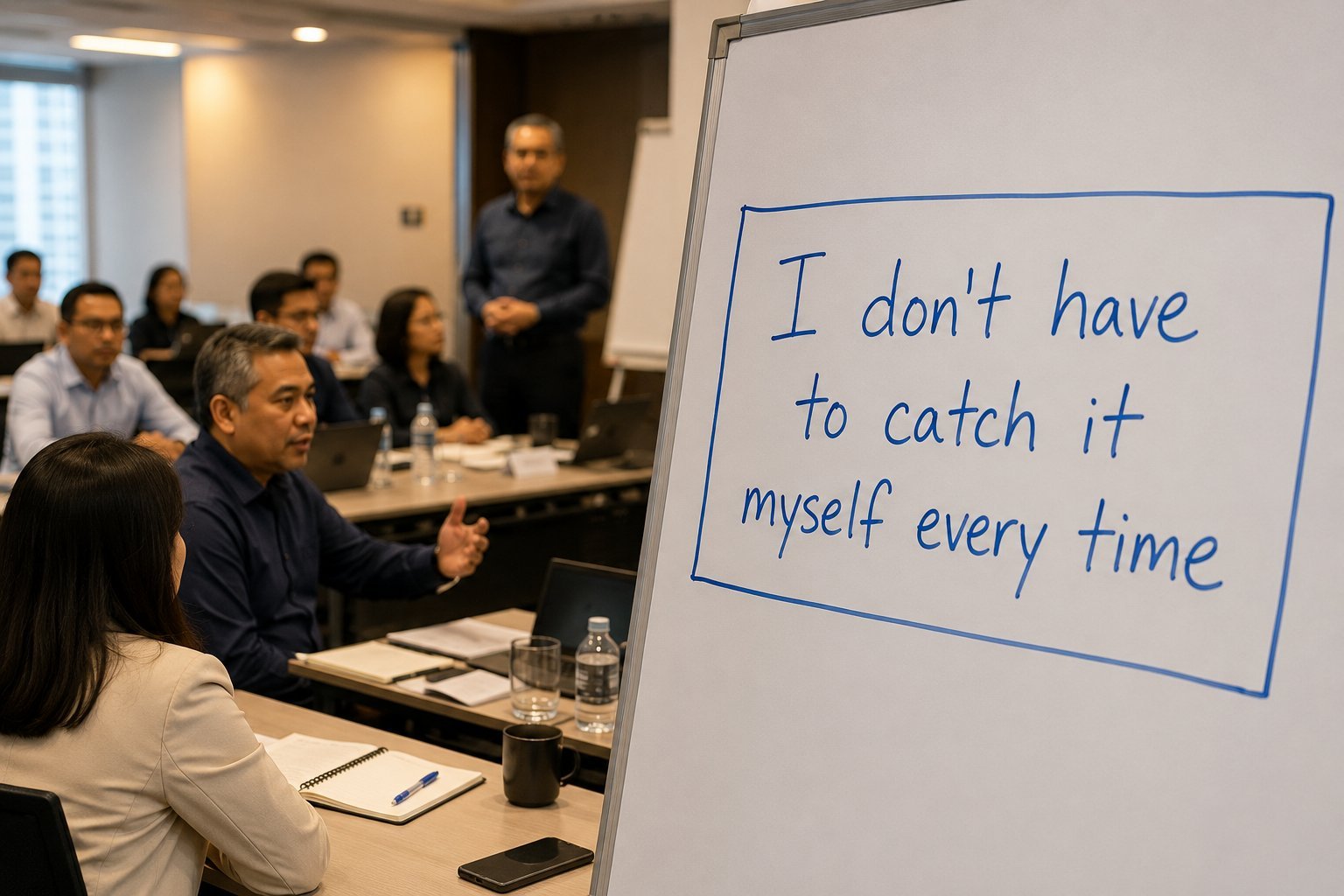
Amir reports to the trainer — I don't have to catch it myself every time
Part 2 training day · Three weeks after Chapter I · The whiteboard

The room felt different from the first session. Same tables, same windows, same KL skyline holding its position outside the glass. But the people in the chairs had been somewhere in between — back to their desks, back to their actual jobs, back to the reality of what AI tools actually do when no trainer is watching.

The session opened the way the programme was designed to open: thirty seconds each. One thing that worked. One thing that surprised you. One thing that failed or was harder than expected.

Maya went near the start.

Maya

"I started adding a line to every document I produce with AI assistance. A note at the top: this section contains AI-assisted content, all statistics verified against named sources. I didn't have a name for it. I just started doing it because it felt like the right thing."

The room was quiet for a moment in the particular way of people recognising something correct that they had not yet thought to do themselves.

The trainer nodded. "There is a name for it. It's called an AI Use Statement. You invented it independently. That is exactly what the habit of mind looks like when it starts working."

The trainer asked if she had it with her. She did — on her phone, the note she had typed to herself the first time she used it.

Maya · reading from her phone

"AI-assisted content. Sources verified. Statistics confirmed against original documents. Recommendations reviewed against client brief. Human sign-off: Maya Chin, [date]."

The trainer read it once. "Forty-two words. One sentence each for what the AI did, what you verified, and who is accountable." He wrote the structure on the board. "That is the AI Use Statement. You wrote it from instinct. Today we formalise it."

Maya wrote nothing in her notebook. She did not need to.

When Amir's turn came, he was direct.

Amir

"I taught two of my people the verification method my daughter showed me. Last week, one of them flagged a statistic I would not have seen in time. He found it himself. I did not have to be in the room."

The room absorbed this. Something in it was different from the usual between-session reports — not what Amir had done, but what he no longer had to do.

The trainer wrote on the board: I don't have to catch it myself every time. Drew a box around it.

Trainer

"That is today's agenda."

Amir

"There's a name I've been using for it. In my notes. The Putri Protocol."

Trainer

"Tell us."

Amir

"My daughter. She attended this programme last month. She used what she learned in Part 1 to catch a significant error in a client deliverable — at my dining table, in ninety minutes, with the handout from the session. I started calling it that. Now my team calls it that."

Trainer

"Your daughter named the method. Your team is now running it without you. That is not a protocol. That is a culture beginning."

Amir looked at the board. He wrote one word in his notebook, the same word he had been returning to since the lunch at Ong's. Systematic.

XIX
What Gets Built

The training room. Across the day.

The programme did not teach governance in the abstract. It built governance in the room, from actual job contexts, one artefact at a time. By 4:45pm Amir had six things he had not arrived with.

ISO/IEC 42001 Gap Analysis — BrightBridge

Readiness level: Early Stage. Not a polished assessment. An honest one. Six gaps identified, each with a named remediation owner and a six-month sequenced plan. Dr. Rohini had asked for where they actually were, not where they would like to be. This was where they actually were.

PDPA 2010 AI Compliance Assessment

Two statutory gaps. Free consumer AI tools used on client accounts without data processing agreements. No updated PDP Notice covering AI processing of personal data. Both gaps named, both with a clear remediation path.

The Putri Protocol — Formalised

A three-step prompt chain for every government consulting deliverable: Gather (structure the specific context), Draft (generate with guard-rails baked in — no statistics without named sources, no recommendations outside the stated brief), Verify (produce a verification summary flagging every claim requiring human sign-off). Named in the governance proposal as the Putri Protocol. Amir did not ask anyone's permission to name it that.

The AI Interaction Log

Built in twelve minutes using AI Code. Eight standard fields: date, tool, staff name, task type, prompt summary, risk level, output used, human gate status. Three PDPA fields: personal data involved, consent status, cross-border flag. A Google Apps Script connects individual logs to a shared team master sheet automatically. The AI generates every row.

The Human Verification Column

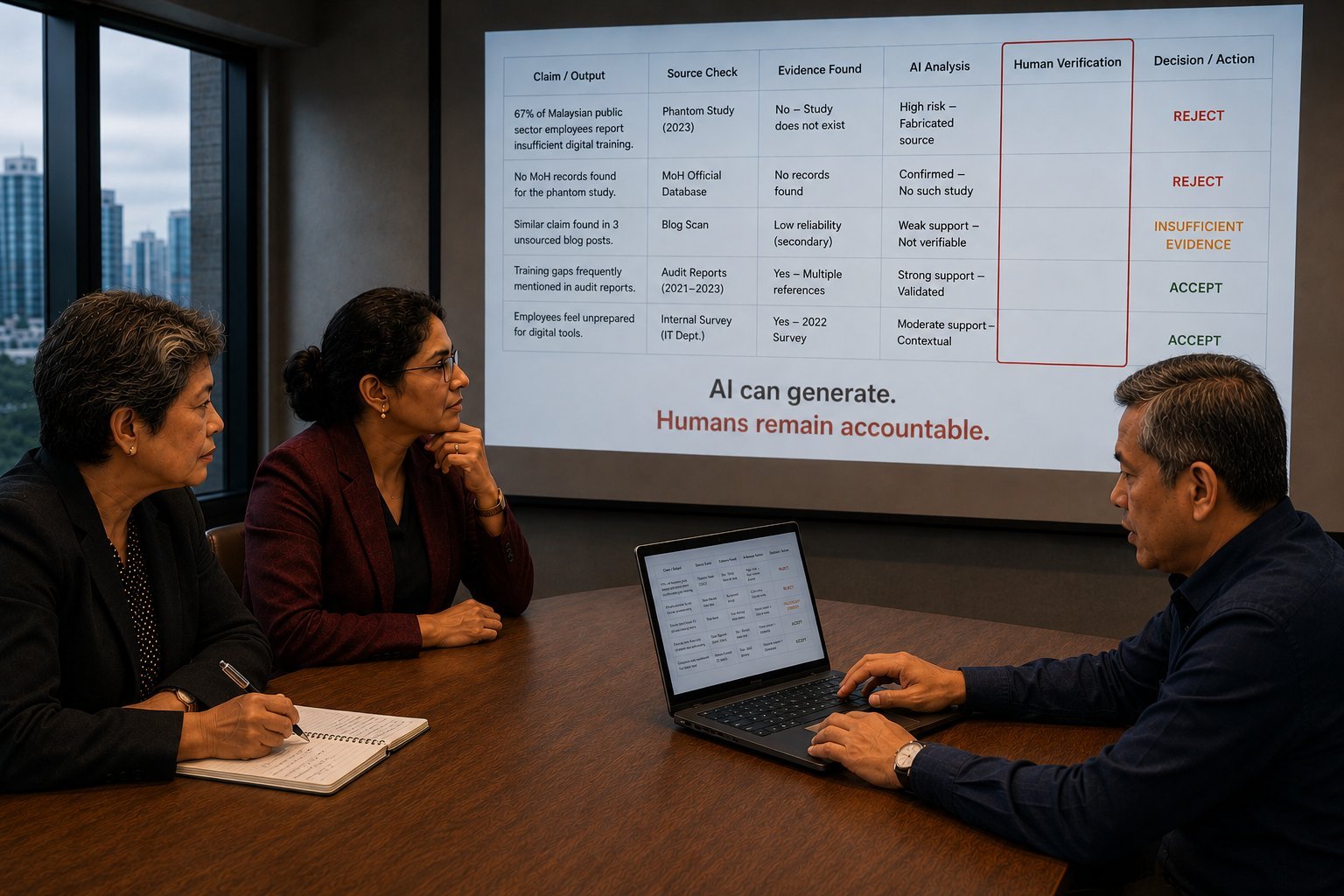
One column in the shared master sheet. Blank until a manager reviews and signs off. The AI cannot complete this field. It is the only field the AI cannot complete. This distinction — between what is automated and what requires human judgment — is the architecture's load-bearing wall.

The One-Page AI Use Policy

Six clauses. A PDPA section. Named clause owners. A review date. And one disclosure paragraph — 59 words, drafted in the room, peer-reviewed by the table next to him:

"BrightBridge Consulting discloses AI tool use to clients in any deliverable where AI contributed to content, analysis, or recommendations. All AI-assisted outputs are logged in the BrightBridge AI Interaction Log before delivery. Logs are available to clients upon request and are retained for 24 months."

5:03pm — Amir emails Dr. Rohini from the training room. Subject: Governance proposal — first draft. Sending Friday.

He did not describe what he had built. She had asked for something deployable. He would show her.

XX
Faridah Is in the Room

BrightBridge boardroom. Two weeks after the training. Morning.

Amir presents the AI governance package — Faridah sees the Human Verification Column
BrightBridge boardroom · AI can generate. Humans remain accountable.

Faridah arrived before Amir and sat at the far end of the table. She had a printout of the proposal in front of her with three handwritten questions in the margin — she had read it over the weekend, which Amir had not expected and Dr. Rohini had. Her arms were folded. She would have said she was cold; the boardroom aircon was always too high.

Amir walked through the package. The gap analysis. The PDPA assessment. The remediation plan. The formalised Putri Protocol. The policy draft.

Faridah listened without expression. She asked one of her margin questions about the remediation timeline. He answered it. She wrote something next to it.

Then he opened the shared Google Sheet on the projector. The master sheet showed team AI activity in real time — every interaction logged, risk levels colour-coded, the human verification column running down the right side. Blank in every row. Waiting.

Faridah leaned forward. Almost imperceptibly. But she did.

Faridah

"So someone has to fill this in for every AI interaction. Who?"

Amir

"The AI generates the log entry from the session. The consultant reviews and confirms it. The human verification column is the one only a manager can complete."

Faridah

"So this is where my sign-off goes."

Amir

"Yes."

She looked at the column. Then at Amir. Then back at the column. She said nothing. Dr. Rohini watched her and said nothing. Amir continued to the policy draft.

But something had shifted in the room, quietly, in the way that things shift when a person has seen something they were not expecting to see and have not yet decided what to do with it.

XXI
Two Days Later

Amir's desk. Two days after the boardroom. Unscheduled.

She appeared without a meeting request. She stood beside his desk rather than sitting — the posture of someone who had not yet decided how long they were staying.

Faridah

"Show me the log again."

He opened his laptop and turned it toward her. She read every field description carefully, the way she read contracts — everything, in order, once. She did not ask questions while she read.

She got to the Human Verification field. Read the description: "Completed by the person responsible for the deliverable before submission. The AI cannot complete this field."

She was quiet for a moment that was longer than it looked.

Faridah

"The AI fills in the log. Only I can verify it."

She said it the way someone says something they have just understood to be true — not as a question, not as a performance. As a fact that had arranged itself correctly.

The AI fills in the log. Only I can verify it.
Faridah

"Send me the template."

She went back to her desk. That same afternoon she opened the shared Google Sheet and filled in the first entry — for a project she had reviewed that morning, a deliverable that had already gone to a client, a judgment call she had made on instinct the way she had made ten thousand judgment calls before it. She filled in the entry anyway. She logged what she had done, and why, and what the output had been, and she put her name in the verification column.

She did not tell Amir she had done this. He saw it in the sheet the next morning. He did not say anything to her about it.

What had shifted was this: the governance system, which she had experienced as a structure being imposed on what she knew, had become a record of what she knew. More than twenty years of quality decisions, now in a column. Her expertise had a field. The system did not replace her judgment. It made her judgment visible.

XXII
The Window Table, After

Ong's Restaurant. The window table. Dr. Rohini and David. Kevin has brought tea without being asked.

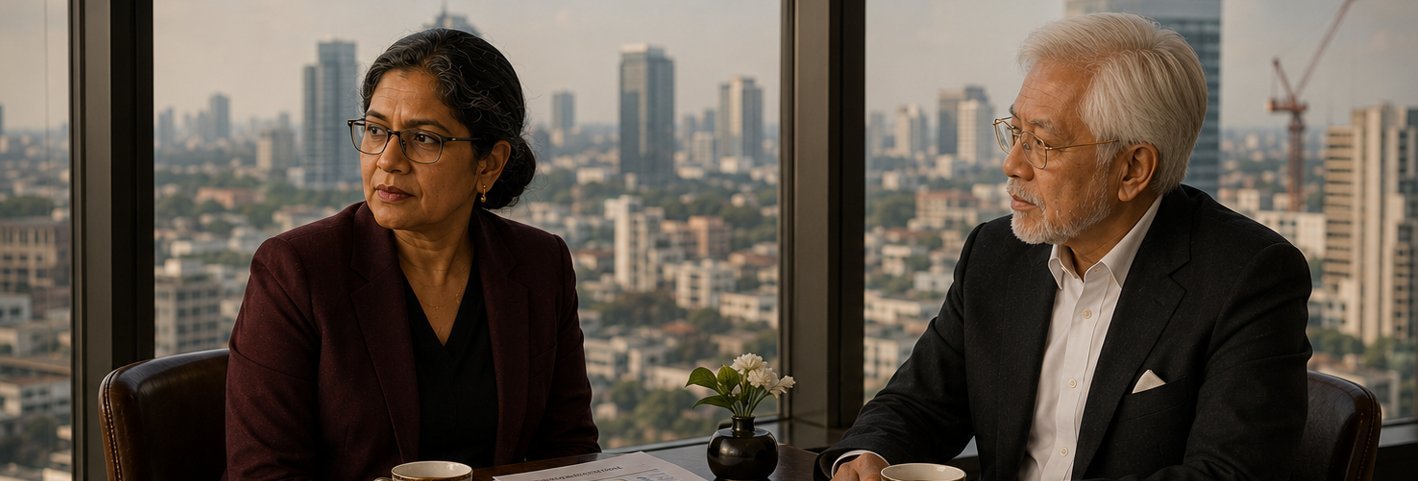
Dr. Rohini and David at the window table — the question
Ong's Restaurant, Petaling Jaya · The window table · The question

David had asked to meet. He had not said why.

Dr. Rohini had been thinking, on the way over, about the MoH email. Three months on her desk. The governance proposal now drafted. And still, when she tried to compose the reply, she found herself writing sentences and deleting them. She knew the facts. She was not certain they added up to an answer she could defend.

David read the governance package over the first part of lunch. He read it completely, without commenting. Dr. Rohini ate. She did not watch him reading.

He finished. He set it down. He looked out the window.

The crane at the eastern edge had stopped. Whatever it had been building was finished, or at least far enough along that the crane was no longer needed. The skyline looked slightly different for it — one less vertical line against the afternoon.

Dr. Rohini

"I still don't know how to reply to MoH. The proposal gives me the what. I can't find the how — the tone, the position. I've drafted it twice and deleted both."

David looked at her. Not at the package. At her.

David

"Ron. What do you think your father would do?"

The question landed the way his questions always did — precisely, without warning, in the exact place she hadn't been looking.

She looked slightly to the left before she spoke. David, who had known her since she was watching her father handle difficult clients at this table, recognised it as the tell she had when she was being genuinely uncertain rather than performed.

Then she answered. Slowly. As if she were discovering the words as she said them.

Dr. Rohini

"He would reply. Directly, without hedging. He'd say what we have, what we don't have yet, and what we're doing about it. He wouldn't wait until the answer was perfect. He'd move first — and turn moving first into the thing he was known for."

She stopped.

Dr. Rohini

"He would have made it a service before anyone else knew it was one."

David said nothing for a moment. Outside, the city continued building itself in the unhurried way of cities that have been doing it for a long time.

David

"Yes. He would have."

David

"Three GLCs. I'll make the introductions next month. Not as a favour. As a business development meeting, which is what it is. You bring this paper. They will have questions. You will have answers. That is the conversation."

He picked up his jacket. He had said what he came to say.

Dr. Rohini sat with the window a little longer after he left. The MoH email was still on her desk. She knew now exactly what it would say. She had known, she realised, since the moment she answered David's question — she had simply needed someone to ask it.

She left a tip more generous than the bill required. She always did, at this table.

XXIII
Three Wednesdays

Four weeks after the training. Three different desks. The same Wednesday.

Maya's desk
BrightBridge, Petaling Jaya

MoH renewed the contract. The follow-on training design contract — RM 220,000 — was awarded three weeks later. The cover page of every deliverable she submitted now carried an AI Use Statement. She had not been taught the format. She had written it herself, between sessions, because the programme had given her the habit of mind that generates such things.

Her verification checklist now had seven steps. She had added steps six and seven herself, after the programme. Step six: check whether the AI's recommendation matches the client's actual context rather than the generic sector context. Step seven: confirm the document discloses AI use before submission. Neither step had been taught. They had arrived because she was now the kind of professional who noticed when something was missing and added it.

Faridah's desk
BrightBridge, Petaling Jaya

A junior manager was sitting across from her. Faridah was explaining the audit log. Not the policy, not the ISO standard, not the governance framework. The log. How to run the closing prompt at the end of an AI session. How to review the entry the AI generates. How the entry feeds automatically to the shared master sheet. How the human verification column is the one thing the AI cannot touch.

The junior manager was taking notes.

Faridah had not used an AI tool herself. She did not need to. Her role was not AI user. Her role was human gate — the person whose sign-off made the system complete. She had come to understand, without anyone saying it to her directly, that the governance architecture had not diminished what she knew. It had given what she knew a structure that others could see.

More than twenty years of judgment, now in a column. Named. Dated. Signed.

Putri's desk
A fintech company, Kuala Lumpur

A Wednesday like any other. She was in a project review. Across the table, a colleague was presenting an analysis with three statistics from an industry report. Putri stopped him at the second one.

Putri

"Which report? Page number?"

The colleague checked. The statistic was from a summary article, not the original report. The original report had a different figure. They corrected it before the analysis went to the client.

Putri did not call it the Putri Protocol. She did not know that was what Amir had named it, or that it was now the standard verification step for every government deliverable in his division, or that it was named in a governance proposal that had just been presented to a board, or that her name was in a column somewhere in a shared Google Sheet that a senior operations manager had filled in quietly on an afternoon not long ago.

She just asked for the page number. She always did now.

She did not know that the programme she attended on her own time, for her own reasons, at a training centre near KLCC on a Wednesday a few months ago, had set all of this in motion.

She went back to work.

Before she did, she finished something she had started on the LRT that morning. The training programme had a closing activity — three sentences, written from your own job context, to carry the habit forward. She had been drafting hers for two weeks. She typed the final version now.

Putri · her notebook

"When I receive a report with statistics, I ask for the source and the page number before I accept the figure."

"When I produce analysis with AI assistance, I verify every claim against the original document before it leaves my desk."

"When someone on my team skips the verification step, I ask them to show me the source — not because I distrust them, but because the habit only holds if everyone does it."

She did not call it the Putri Protocol. She called it what it was: the thing you do before you send something out.

· · ·

End of Series

The question Amir wrote in his notebook on the way down in the lift: "The question is not what to build. The question is whether what gets built will still make sense on a Wednesday."

It was a Wednesday when the error was made. A Wednesday when Maya sat in the second row with her empty columns. A Wednesday when three people — in three different rooms, in three different organisations — did the work correctly, without thinking about it, the way you do things that have become part of how you work.

Both programmes are designed to answer that question.

GenAI for Practitioner

Two separate one-day programmes in Kuala Lumpur. 100% HRD Corp claimable under SBL-Khas. No technical background required for Programme 1. Programme 1 mandatory for Programme 2.

GenAI for Practitioner
Programme 1
AI for Practitioner
HRDC: DT-P1-GAIP  ·  No technical background required
GenAI for Practitioner
Programme 2
AI Governance and Advanced Practice
HRDC: DT-P2-GAIP  ·  Programme 1 mandatory
genai4p.web.app →

The Cast

The people in The Putri Protocol. Eight characters. One story.

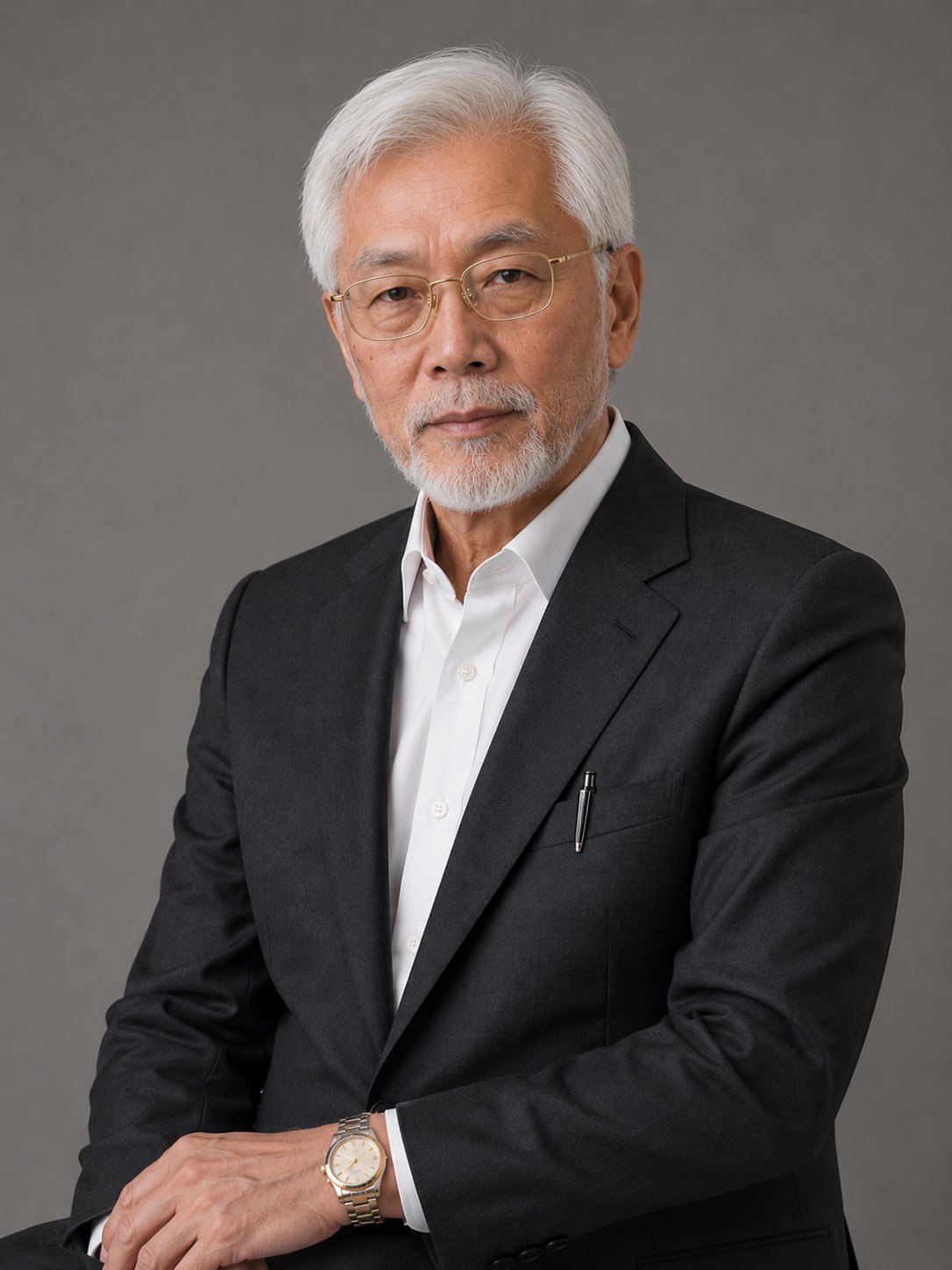
The full cast of The Putri Protocol at Ong's Restaurant

Ong's Restaurant, Petaling Jaya  ·  The people behind The Putri Protocol.

Maya Chin
Maya Chin
Training & L&D Consultant · BrightBridge

Thirty-one. Good at her job, and knew it. That, as it turned out, had been part of the problem. She drew a line down the centre of every notebook page — things to remember, things to act on. Both columns still empty when the story begins.

Amir
Amir
Head of Public Sector Division · BrightBridge

Fifty-two. Thirteen years in government-linked consulting, nine at BrightBridge. Built the public sector division from nothing. He reads everything slowly, from the beginning, without skipping — the way you read something when your name will be the last line of defence.

Putri
Putri
Business Analyst · Fintech company · KL · Amir's daughter

In her twenties. Her father's stillness, her mother's directness. She attended GenAI for Practitioners on her own time, for her own reasons. She never found out what Amir named the protocol. She just always asks for the page number now.

Dr. Rohini
Dr. Rohini
Managing Director · BrightBridge · Daughter of the founder

She inherited the firm from her father and carried it forward. When she speaks, the room waits. Her one tell: she looks slightly to the left when genuinely uncertain. David has known her long enough to recognise it. He calls her Ron, privately.

Faridah
Faridah
Head of Operations & Shared Services · BrightBridge

Fifty-six. More than twenty years at BrightBridge. She built the firm's delivery infrastructure without a template. She sets her coffee cup down deliberately when something displeases her. Her silence is not disengagement. It is assessment.

Tan Sri David Lim
Tan Sri David Lim
Board Chairman · BrightBridge · Retired PwC Senior Partner

Sixty-seven. Thirty years at PwC, last fifteen in governance and risk. Sits on four public company boards. He puts his phone away when someone approaches. He speaks least. He says most. He has been coming to Ong's for over twenty years.

Kevin Ong
Kevin Ong
Manager · Ong's Restaurant · Rooftop, BrightBridge tower

Mid-thirties. Studied hospitality in Melbourne. Returned. Had the good sense not to change what didn't need changing. He has the window table ready when they arrive. He does not need to be asked.

Mr. Ong
Mr. Ong
Founder · Ong's Restaurant · In his seventies

He won the tender in 1995. He never left. He comes in most days, moves through the room the way founders move through things they have built — not managing, just present. He occasionally calls Dr. Rohini "Dr. Krishnamurthy's daughter." She has never minded.

GenAI for Practitioner  ·  P2P Talent Development

The Programme

The verification method Putri used at that dinner table. The governance system Amir built in the training room. The questions Faridah needed answered before she would trust the system. If the story resonated, it is because these situations are real — and the programme is designed around them.

What this programme is

GenAI for Practitioner is a two-part programme designed for working professionals who are already using AI tools — or managing teams that are — and need to use them with confidence, accountability, and legal compliance.

Part 1 covers the practical skills: how to prompt effectively, how to verify AI output, how to protect organisational data, and how to build the habits that prevent a near-miss from becoming a crisis. Part 2 covers governance: ISO/IEC 42001 readiness, PDPA compliance for AI processing, audit systems, and how to turn AI governance into a professional service — not just an internal policy.

Both sessions are built around participants' real job contexts, not generic scenarios. You leave with artefacts you can deploy — not slides you will review once and archive.

GenAI for Practitioner
Programme 1

AI for Practitioner

HRDC: DT-P1-GAIP  ·  No technical background required
  • Traffic light risk classification for AI outputs
  • The Putri Protocol — structured verification method
  • PDPA-safe prompting and data handling
  • AI Use Statement — what it is, how to write it
  • Sector-specific prompt engineering (government, consulting, finance, HR)
  • Building verification into your daily workflow
GenAI for Practitioner
Programme 2

AI Governance and Advanced Practice

HRDC: DT-P2-GAIP  ·  Programme 1 mandatory
  • ISO/IEC 42001 gap analysis — where your organisation actually is
  • PDPA 2010 AI compliance assessment
  • The AI Interaction Log — built live using AI Code
  • The Human Verification Column — what it is and why it matters
  • One-page AI Use Policy — deployable before you leave the room
  • AI governance as a professional service concept

Who should attend

Programme 1 is for any professional who produces deliverables with AI assistance: consultants, training designers, L&D professionals, HR practitioners, operations managers, policy officers, analysts. No technical background required. If you have used ChatGPT or any AI writing tool in your work, this programme is for you.

Programme 2 is for managers, team leads, compliance officers, and senior professionals responsible for AI governance in their organisation. Programme 1 is mandatory — not because the content is gatekept, but because the governance you build in Programme 2 only makes sense if you have done the verification work in Programme 1 yourself.

How it works

Both sessions are one full day each, held in Kuala Lumpur. The two sessions are separated by a gap of two to four weeks — deliberately. Participants return to their real jobs between sessions and apply what they learned. They come back to Programme 2 not with good intentions but with evidence from the field: what worked, what surprised them, what they couldn't solve alone. That field evidence becomes the raw material for the governance work in Chapter II.

This is why Amir could report in Chapter II's opening check-in that his team had already run the protocol without him. The gap between sessions is where the learning becomes real.

Two separate one-day programmes in Kuala Lumpur, presented by P2P Talent Development and the Malaysia Project Management Practitioner Community (MPC). 100% HRD Corp claimable under SBL-Khas.

Find out more at genai4p.web.app →

© 2026 P2P Talent Development PLT. All rights reserved. The characters and organisations depicted in The Putri Protocol are fictitious and created for educational purposes.